
Blog
Proposal Workflow
Practical guidance for proposal teams: knowledge management, security questionnaires, readiness, and avoiding burnout.

Solve the Security Questionnaire Trap, Stop Manual Recopying
Every time you land a enterprise prospect, the clock starts. They send a security questionnaire containing 100 to 300 questions. You open the Excel sheet and realize you have answered 90% of these questions last month. Whether it is SOC 2 (System and Organization Controls 2), ISO 27001 (information security management systems), or GDPR (General Data Protection Regulation), the manual work of 'search, copy, and paste' is a significant drain on your productivity.
Read article →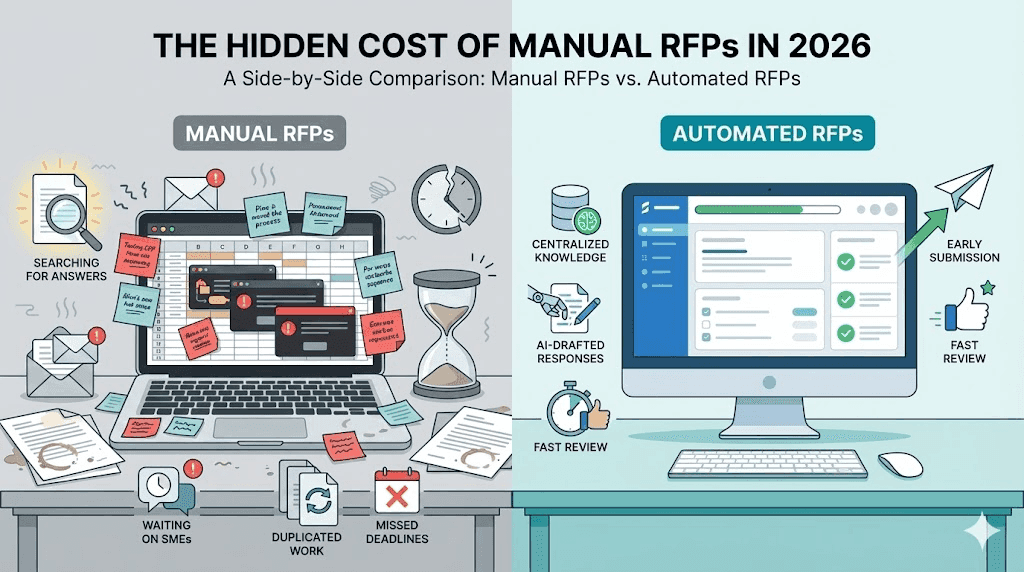
The Hidden Cost of Manual RFPs in 2026 (and What You Can Do About It)
It’s January 2026, and every sales and proposals team is setting goals: higher win rates, shorter cycles, more time selling, not answering questions. Yet across industries, one recurrent blocker remains: manual RFP response work.
Read article →
The Proposal Manager’s Guide to Working Smarter, Not Longer
Late nights. Last-minute scrambles. Chasing SMEs for the same answers you asked for last quarter.
Read article →
Why Every RFP Feels Like a Pop Quiz (and How AI Proposal Software Can Help You Pass)
An email pings your inbox. Another RFP has arrived. It’s urgent, it’s long, and seven stakeholders are waiting for you to provide perfect answers.
Read article →
The Hidden Human Cost of RFPs: Burnout, Bottlenecks, and How AI Can Help
Picture this: your team is burning the midnight oil, chasing multiple subject-matter experts via email, copy-pasting answers across documents, and still racing against a looming RFP deadline. It’s quiet, intense, and rarely discussed. The emotional tax of RFPs isn't measured by lost deals alone; it’s paid in fatigue, frustration, and disengagement.
Read article →
You’re Not Too Small for a Proposal Manager. Here’s Why.
Your team just got an RFP, and it’s due in 10 days. Everyone’s juggling other priorities. Your go-to coworker is on the road. The security questionnaire is 150 questions long. Someone suggests splitting it up “like last time,” but you remember last time… the long days, the confusion, the scramble to fill gaps hours before submission. You’ve been here before—and you know it’s not sustainable.
Read article →
Building an RFP Knowledge Management System That Actually Works
Every RFP team knows the feeling: scrambling to find that perfect answer you wrote six months ago, digging through old documents as the deadline looms, or worse — discovering conflicting information that leaves you questioning which version is actually correct.
Read article →
The Role of Technology in Streamlining RFP Responses
Navigating the RFP process can often feel like an uphill battle—demanding time, coordination, and precision. For many companies, responding to Requests for Proposals (RFPs) is an essential but resource-intensive challenge that strains teams and slows business growth. The process can feel like a high-stakes race against the clock, where inefficiencies, inaccuracies, and fragmented knowledge hinder success. But what if technology could turn this chaos into an opportunity?
Read article →
The Hidden Costs of RFP Challenges
For many companies, responding to Requests for Proposals (RFPs) and Requests for Information (RFIs) is an essential part of winning business.
Read article →Book a demo
Turn RFP knowledge into a revenue workflow.
Bring the contracts you care about. Settle will show where your team is likely missing signals and how past wins can improve future responses.